

Hey there, if you’ve ever shopped around for EPE plastic granulator machines, you’ve probably heard the term “compression ratio” thrown around more times than you can count—especially from us, your go-to EPE granulator supplier, when we’re chatting through custom builds or troubleshooting tips. But let’s be real: most people either gloss over it because it sounds too technical, or they get so confused by the jargon that they just nod and hope it works out. Spoiler: skipping this part leads to headaches later—like tangled pellets, stuck screws, or even burnt plastic that ruins your whole batch. Today, I’m breaking this down like we’re grabbing coffee after a long day on the factory floor, no fancy PhD required.

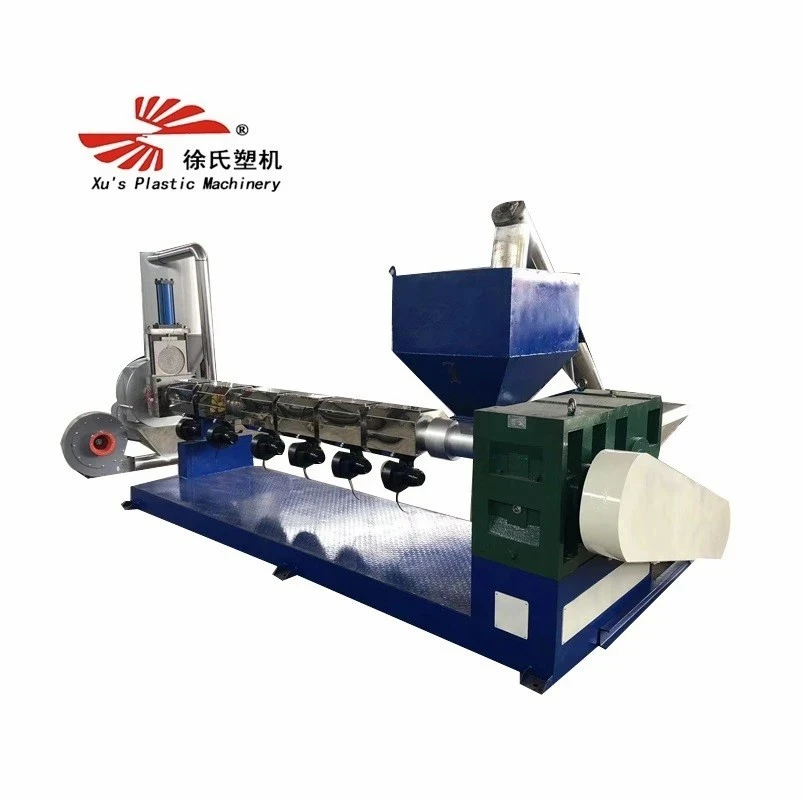
First off, let’s start with the basics for anyone who’s new to EPE (expanded polyethylene, if you’re just learning the acronym). EPE is that super light, foamy plastic stuff used for packing electronics, furniture, even food packaging—so it’s bouncy, has a lot of air pockets, and is way less dense than rigid plastic like PP or HDPE. That’s a big deal when it comes to compression ratio, because EPE behaves totally different from your run-of-the-mill waste plastic. The compression ratio isn’t just a number we pull out of thin air; it’s the most critical setting for how your granulator turns that bulky, airy EPE scrap into uniform, usable pellets.
Wait, quick definition check, before I move on: compression ratio (CR) for granulators is the comparison between the volume of material at the feed end of the screw (where you dump the EPE scrap) and the volume at the discharge end (where the melted, compressed plastic gets pushed out to form pellets). We calculate it by dividing the screw channel depth at the feed by the screw channel depth at the metering end (the part where the plastic is fully melted and ready to be shaped). So if a screw has a feed channel depth of 12mm and metering depth of 3mm, that’s a 4:1 compression ratio—easy math, right?
Now, here’s where EPE is different from other plastics. Regular rigid plastic has a fairly consistent density, so a 3:1 or 4:1 CR works most of the time. But EPE? It’s like working with a pillow full of plastic beads. That fluffy, air-filled structure means you have to squeeze out all that air before the plastic can melt evenly. If your compression ratio is too low, the EPE scrap doesn’t get compacted enough—air gets trapped in the melt, leading to wobbly, inconsistent pellets that are either full of gaps or break apart mid-process. Too high, on the other hand, and you’re over-compressing that foamy stuff, which can cause excessive friction and heat. Burnt plastic is the worst, especially with EPE—it ruins the batch, clogs your screens, and even wears out the screw faster. That’s why for EPE specifically, we don’t just use a one-size-fits-all CR; we tweak it based on whether you’re working with post-industrial EPE trim, post-consumer EPE scrap, or even EPE mixed with a tiny bit of other foamy plastics.
Let’s talk about the sweet spot for EPE, since that’s what our machines are built for. 9 times out of 10, we run EPE granulators at a compression ratio between 5:1 and 7:1. Yeah, that’s higher than what you’d use for rigid plastic, but it’s exactly what’s needed to squeeze all that air out of the foamy EPE. Wait, but why the range? If you’re working with super light, low-density EPE (like the thin packing foam you get around a phone), you might need to bump it up to 7:1 to make sure it’s compacted enough before melting. If you’re dealing with slightly denser EPE (like thicker packaging for appliances), a 5:1 or 5.5:1 CR works perfectly—you don’t want to over-squeeze it and cause friction heat.
Now, this isn’t something you can set and forget, either. We also adjust CR based on what’s paired with our granulator machine. For example, if you’re using a die face water ring pelletizer to make those perfect round EPE pellets, the CR has to be just right—too much trapped air will lead to uneven pellet cutting, since the plastic isn’t a uniform melt when it hits the die. You can check out our high-performance die face water ring pelletizer here: Die Face Water Ring Pelletizer — we design our EPE granulators to sync exactly with these, so you don’t have to fiddle with mismatched settings.
Another thing that affects compression ratio? What you’re using the pellets for down the line. If you’re making masterbatch with EPE as a carrier resin, the compression ratio needs to be consistent to get uniform color dispersion. For that, our masterbatch water ring pelletizer line pairs with EPE granulators set to a steady 6:1 CR— it’s dialed in to keep the melt uniform, so your masterbatch mixes evenly every time. You can see the details here: Masterbatch Water Ring Pelletizer
Wait, and let’s not forget about energy efficiency—we know every business is watching their power bills these days. If you’re running a high-volume EPE recycling line, a machine with a well-matched compression ratio won’t waste energy squeezing air out that doesn’t need extra pressure. That’s why our energy-efficient eco pelletizing machines are built with custom compression ratios tailored to EPE, cutting down on power use by up to 15% compared to standard granulators I’ve seen out there. Curious? Check it out here: Energy-efficient Eco Pelletizing Machine
Also, for larger operations handling tons of EPE scrap daily, our waste plastic recycling pelletizing system is designed with modular screw options—you can swap out screws with different compression ratios based on the type of EPE you’re processing that day. Like, if you’re shifting from thin packaging foam to thicker EPE sheets, no need to buy a whole new machine; just switch the screw. That flexibility is a game-changer for manufacturers who process mixed EPE scrap. Learn more about the system here: Waste Plastic Recycling Pelletizing System
And if you’re looking to compound EPE with fillers for things like insulation or packaging with extra stiffness, a high-filler compounding twin screw granulator is the way to go. Those machines have even more precise compression ratio control—twin screws let you meter both the EPE and filler evenly, so the compression ratio is balanced to avoid over-shearing or under-compacting the mixed material. Perfect for when you’re not just recycling EPE but upgrading it for new products. Details here: High-Filler Compounding Twin Screw Granulator
Now, a few common mistakes I see people make with compression ratio for EPE, since I’ve been in this supplier game long enough to hear all the horror stories. First, copying a competitor’s settings blindly. Just because their granulator works for their EPE scrap doesn’t mean it will work for yours—different EPE densities, different throughput rates, even different screw designs all change what CR you need. Second, ignoring maintenance. A worn screw has uneven channel depths, so your compression ratio drops without you realizing it. That leads to poor compaction, as we talked about earlier. We always remind our clients to check their screw channels every 6 months to make sure the CR is still on spec. Third, running too fast. Higher screw speed can make the plastic heat up too quick, so you might be tempted to bump up the CR to compensate—no, that just makes the friction worse, leading to burnt material. Match your screw speed to your CR and the type of EPE, and you’ll avoid 90% of issues.
Another point: compression ratio isn’t just for single-screw granulators. Twin-screw models, which are often used for compounding, have a compression ratio too—though it’s calculated a little differently, since there are two screws working together. But the core principle is the same: you need enough compaction to remove air and melt the EPE evenly, without over-shearing the material. That’s why our high-filler twin screw granulators have a variable compression ratio that can be adjusted on the fly, which is super helpful when you’re testing new EPE-filler blends.
Wait, let’s circle back to why this matters for your bottom line. I’ve had clients come to us after buying a cheap EPE granulator from a no-name supplier, thinking they’d save money, only to have production downtime every other week from bad pellets or burnt plastic. They end up spending way more on repairs and lost material than if they’d bought a quality machine with the right compression ratio built in. Getting the CR right from the start means less waste, fewer breakdowns, more consistent product, and lower energy bills. It’s one of those small, technical details that makes a huge difference in your daily operations.
So, if you’re in the market for an EPE plastic granulator machine, don’t just ask about price or capacity—ask about the compression ratio tailored to EPE specifically. A good supplier will take the time to ask what type of EPE you’re processing (post-industrial, post-consumer, mixed, etc.), what you’re using the pellets for, and your production volume, to suggest the right CR and machine setup. We’ve been doing this for years, so we don’t just sell you a machine and dip—we work with you to make sure the compression ratio is dialed in perfectly for your needs, plus we offer support if you ever need to adjust it down the line.
Whether you’re a small business just starting out recycling EPE scrap, or a large manufacturer looking to upgrade your waste processing line, getting the compression ratio right is non-negotiable. If you have questions about EPE granulators, custom CR setups, or any of our related pelletizing systems I mentioned earlier, feel free to reach out to us to chat through your needs. We’re here to help you find the right solution, not just make a sale.
References
- Plastics Technology. "Compression Ratio Basics for Single-Screw Extruders." 2022
- EPE Recycling Association. "Key Parameters for Expanded Polyethylene Pelletizing." 2021
- Advanced Plastic Equipment. "Granulator Compression Ratios for Foamed Plastics." 2023